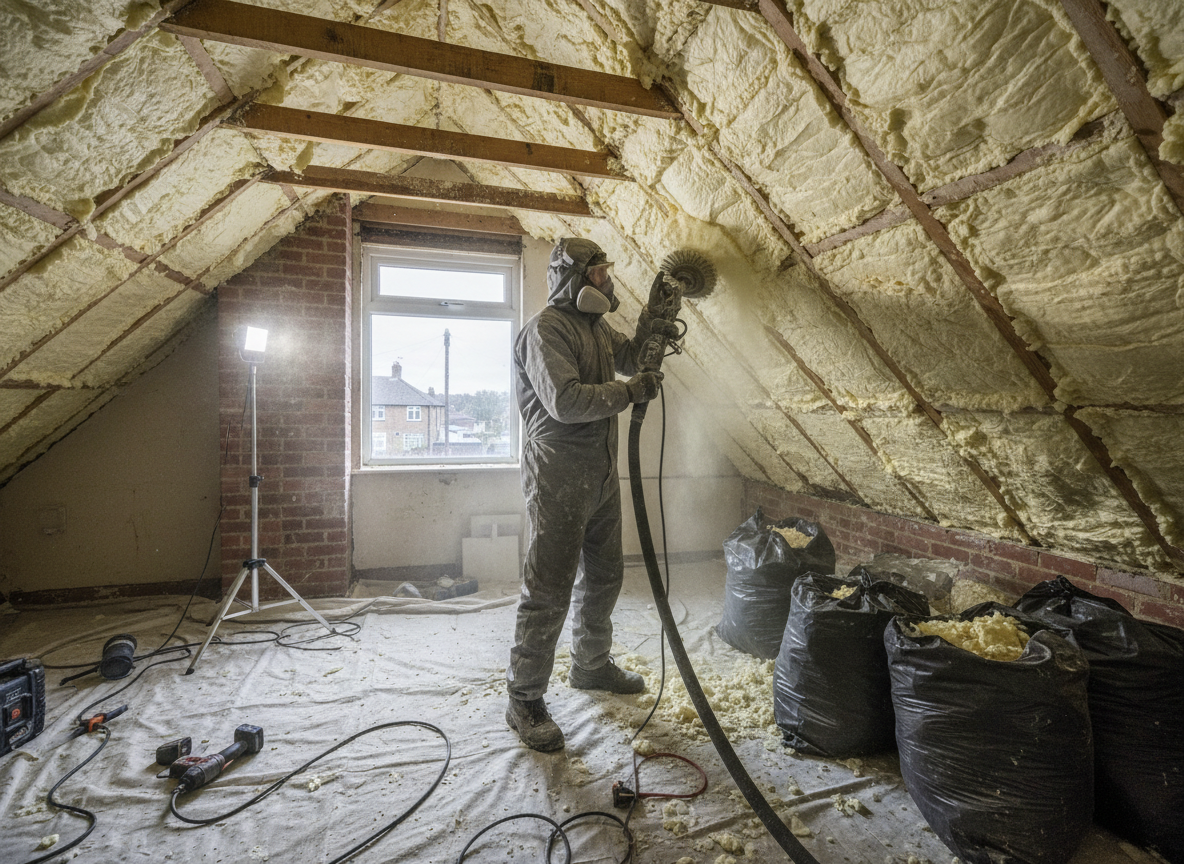
Homes in Immingham often sit close to the Humber estuary and the working docks, where constant wind and salt air push moisture into roof spaces. Spray foam installed years ago in these properties can trap that damp against timber, especially in the post-war semis and terraces along Pelham Road and Bluestone Lane. Removing it requires careful cutting and ventilation work so the structure can dry properly before any new insulation goes in.
Our vans reach Immingham quickly from the 18 Hainton Ave base, taking the A180 and turning off at the refinery roundabout. Narrow rear access on streets like Queens Road means we carry gear by hand and work in sections to avoid blocking driveways. The estuary wind can pick up fast, so we secure dust sheets and extraction hoses before starting any internal cuts.
Residents near Eastfield Primary School and the recreation ground often call when foam starts breaking down and flakes appear in lofts. We clear the material in one visit, bag it on site, and leave the roof space ready for inspection. Twenty-four-hour availability covers evening or weekend jobs when families are home to let us in.
Around Immingham
We regularly work near:
- 📍Immingham Dock
- 📍Pelham Road
- 📍Queens Road
- 📍Eastfield Primary School
- 📍Immingham Recreation Ground
- 📍Bluestone Lane
Spray Foam Removal Grimsby in Immingham — Local Notes
- •Older Immingham terraces near the docks have shallow roof voids that fill quickly with foam; removal must be done in small sections to protect original rafters exposed to estuary moisture.
- •Wind off the Humber can drive rain under loose tiles during work, so we check and reseal any disturbed areas before leaving the property.
- •Narrow ginnels behind Queens Road and Pelham Road limit vehicle access, requiring manual carry of all equipment and waste bags.
- •Homes backing onto industrial land sometimes show higher humidity levels that make foam adhesion stronger; extra time is allowed for scraping residue from joists.