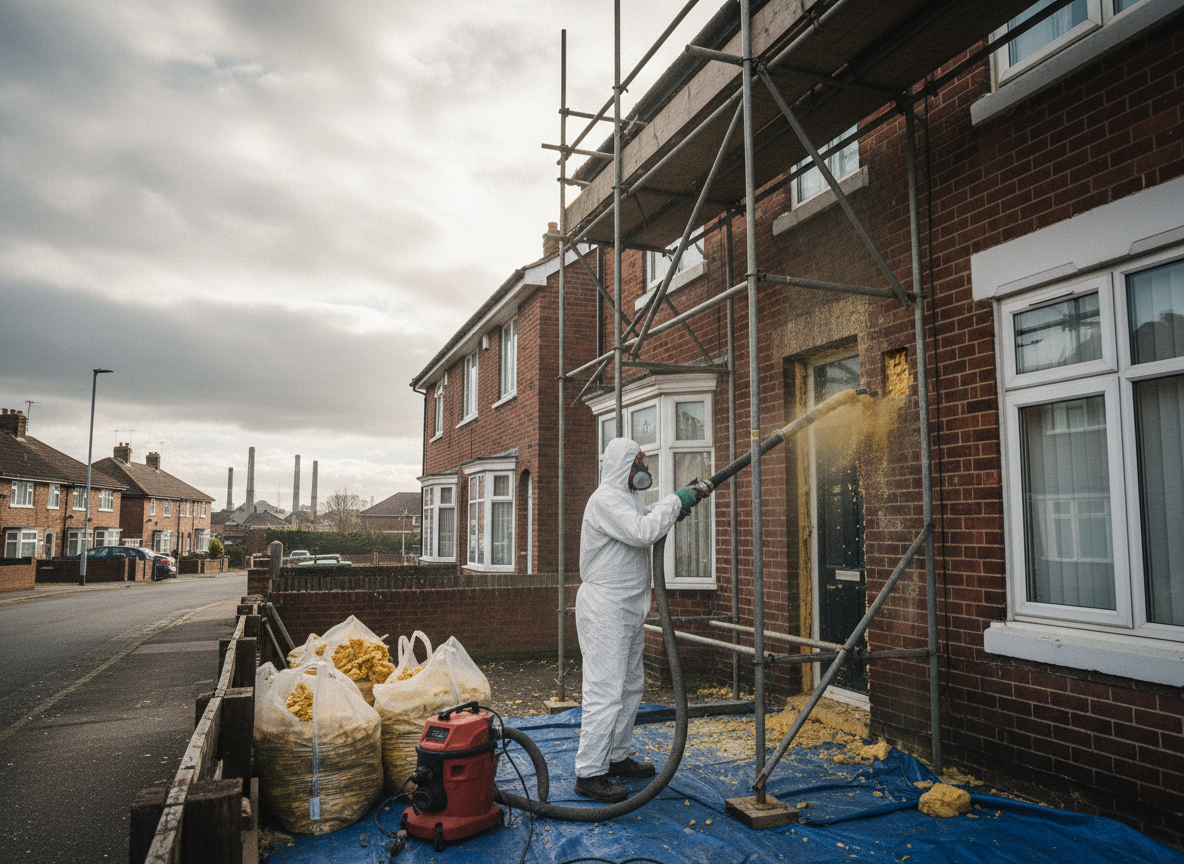
Grimsby’s housing stock includes many 1930s to 1970s semis and terraces with narrow brick cavities originally filled with urea-formaldehyde or polyurethane foam. Lincolnshire’s frequent rainfall and coastal humidity allow water to enter through failed mortar or rooflines, turning the foam into a moisture trap against the inner leaf. Over time this leads to timber decay, efflorescence on plaster, and musty odours that standard ventilation cannot fix. Removal requires careful drilling patterns that follow the original injection holes, followed by mechanical extraction and cavity inspection to confirm no residual material remains lodged behind wall ties.
Access in Grimsby terraces is often restricted to rear yards or shared passages, so dust extraction and debris containment are essential to avoid contaminating neighbouring properties. Once the foam is cleared, the cavity must be left open long enough for any retained moisture to dry before any new insulation or wall repairs are considered. Local building control may require notification if structural ties or lintels are exposed during the work, and care must be taken not to disturb asbestos-containing materials sometimes found in older soffits or rainwater goods common on these streets.
Homeowners frequently discover the issue only after re-plastering fails or when a survey flags the foam for mortgage purposes. In these cases the job expands to include temporary weather protection and sequenced drilling from both sides of the wall where possible. Post-removal, the cavity is left ventilated until moisture readings stabilise, preventing premature re-insulation that would repeat the original problem.
Technician insight
In Grimsby, the thing that catches most people out with Cavity wall spray foam removal is how the high water table and frequent North Sea rain keep narrow cavities in 1930s brick terraces permanently damp once the foam is in place, so the rot often runs further up the inner leaf than expected and only appears once extraction starts.
Semi in the West Marsh
Persistent damp patches appeared on the gable wall of a 1950s semi after heavy winter rain. Inspection showed saturated foam filling the cavity. We drilled the original injection holes, extracted the material section by section, and confirmed the inner leaf had begun to soften. After drying and verification the cavity was left open; the homeowner later reported the musty smell had gone.
How it works
- 1
Site Assessment
Inspect cavity construction, locate injection points, and check moisture levels across internal walls in the Grimsby property.
- 2
Access Preparation
Set up dust extraction and protection for floors and neighbouring areas before drilling follows the original hole pattern.
- 3
Foam Extraction
Remove foam in sections using specialist tools, clearing material from behind wall ties and checking for hidden saturation.
- 4
Cavity Drying and Verification
Leave the cavity open for drying, re-test moisture, and confirm all foam residue is gone before handover.
Pricing
Cost depends on property size, number of elevations, and extent of trapped moisture; upfront quotes provided after inspection.