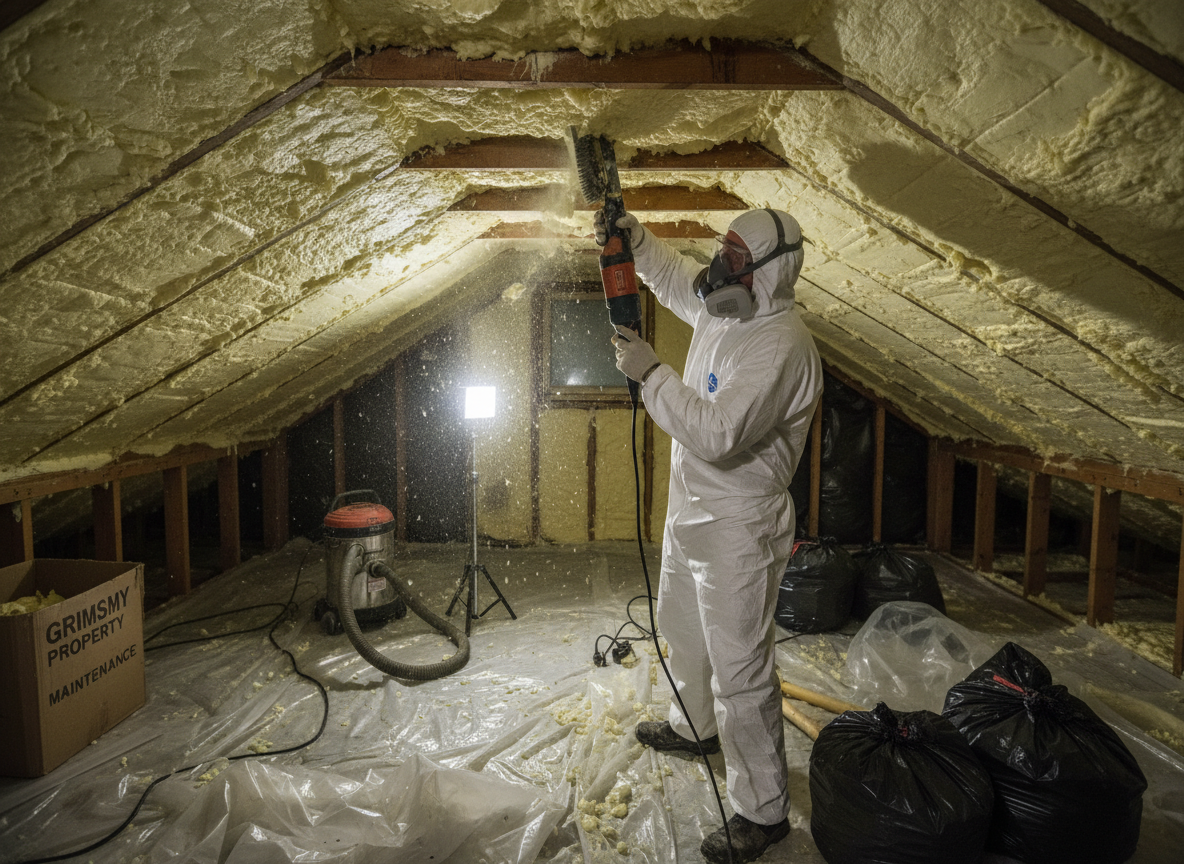
Closed cell spray foam bonds tightly to timber joists and roof slates common in Grimsby’s early twentieth-century terraced housing. Removing it requires cutting the rigid material into sections while protecting original lath and plaster ceilings below. In many Grimsby properties the foam was applied over existing insulation, so crews must separate layers without disturbing electrical cables or pipework that run through the same voids.
Damp winters in the Grimsby area mean moisture can sit trapped against roof timbers once the foam is cut away. Technicians check for rot along the wall plate and rafter feet before any new insulation goes in. Older homes near the docks often have shallow lofts with limited headroom, forcing removal work to be done from scaffolding boards rather than standing upright.
Local building control expects any disturbed insulation to be replaced to current thermal standards, yet the original foam thickness varies from 50 mm to 150 mm depending on when it was installed. Crews document the existing depth and substrate condition so homeowners can decide on replacement without unnecessary extra work.
Handling Hidden Services
Before cutting begins every accessible cable and pipe is traced with a detector. In Grimsby terraces the foam often covers junction boxes, so each one is photographed and labelled before removal. This prevents accidental damage that would require new runs of cable through finished ceilings.
Technician insight
In Grimsby the thing that catches most people out with closed cell spray foam removal is how the foam was often sprayed right over the original lathe and plaster in 1930s terraces around Hainton Avenue. Once you start cutting you find the plaster has already started to sag from trapped moisture, so the removal job suddenly turns into a ceiling repair as well.
Grimsby Terrace Loft Job
Homeowner in a 1930s terrace near Freeman Street reported musty smells after heavy rain. Inspection showed closed cell foam had been applied directly to the underside of the slate roof. Sections were cut away to reveal wet rafter feet and minor rot along the wall plate. Foam was fully extracted, affected timber treated, and the loft left ventilated while the owner arranged new insulation.
How it works
- 1
Site Assessment
Measure loft or wall voids, locate services, and note any rot or water staining in Grimsby properties.
- 2
Containment Setup
Seal off living areas with plastic sheeting and negative air to keep dust from spreading through the house.
- 3
Sectional Removal
Cut foam into manageable blocks, prise from timbers, and bag waste for licensed disposal.
- 4
Substrate Inspection
Check joists, slates, and wall plates for damage before handing over for any follow-on insulation work.
- 5
Final Clean And Ventilation
Vacuum remaining residue and open vents so the roof space dries before new materials are installed.
Pricing
Cost depends on access, foam depth and property size; site visit required for accurate quote.