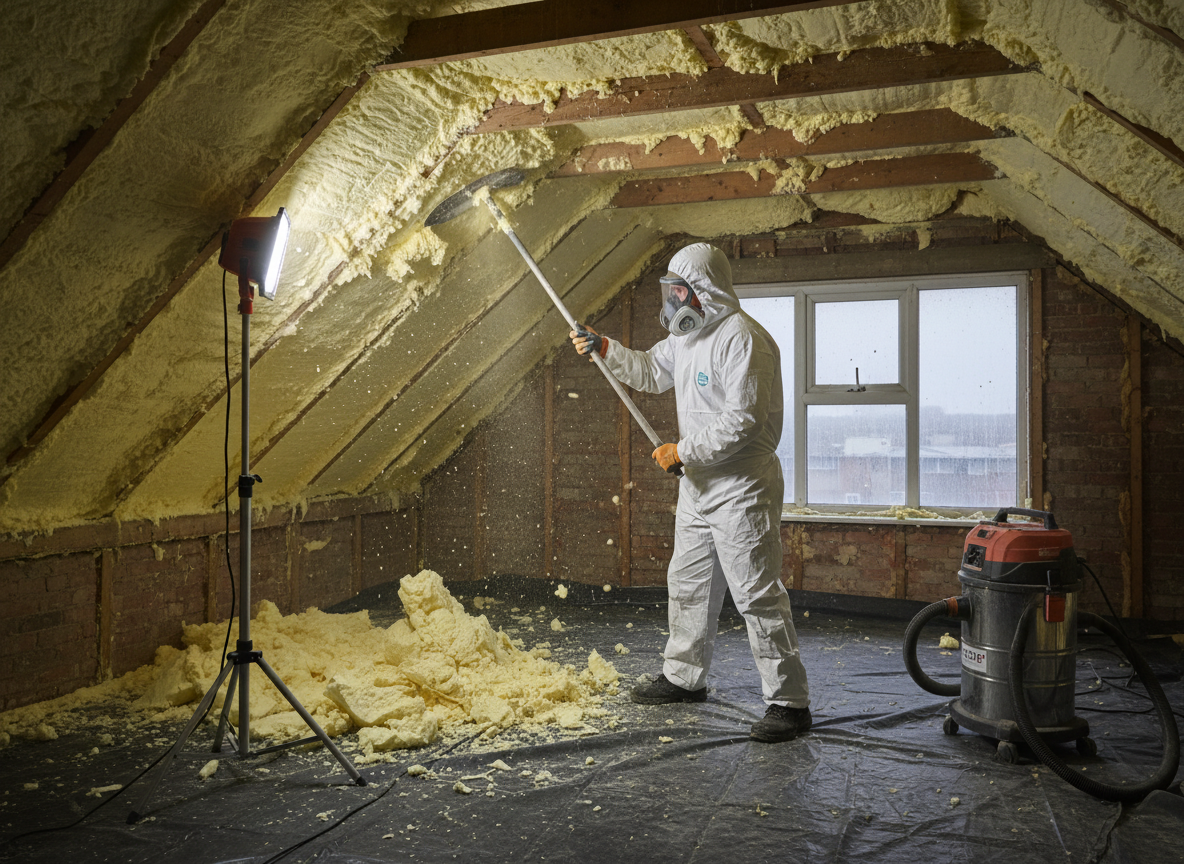
Thermal spray foam removal in Grimsby requires attention to the tight roof voids common in Victorian terraces and 1930s semis around Hainton Avenue and Freeman Street. The closed-cell material often bonds tightly to rafters and joists, and improper pulling can damage original lath and plaster ceilings below. Local operators check for hidden electrical cables and pipework before starting, especially in properties where previous DIY installations have left foam over junction boxes. Once the bulk is cut away, residual adhesive must be scraped without gouging timber, then surfaces are left ready for new insulation or ventilation upgrades.
Grimsby’s damp coastal air means removed foam sections frequently reveal condensation staining on the underside of tiles. Crews working from the base at 18 Hainton Ave carry extra absorbent materials and temporary ridge vents to prevent water ingress during multi-day jobs. Older properties near the docks often have shallow lofts with limited crawl space, so sections are broken down into smaller pieces for safe removal through standard loft hatches rather than cutting new access points. Homeowners are advised to keep windows open during the work to clear any lingering odour from the foam breakdown.
Edge cases include foam that has been sprayed over existing mineral wool, creating a mixed layer that needs sequential removal to avoid contaminating the workspace. In semi-detached houses on streets like Weelsby Road, party-wall foam can migrate into the neighbouring property, requiring careful boundary checks before cutting begins. All waste is bagged on site and taken away the same day, leaving the loft clear for follow-up inspections by local building control if the homeowner plans to reinsulate to current standards.
Technician insight
In Grimsby, the thing that catches most people out with thermal spray foam removal is the way older terraced houses around the Freeman Street market trap moisture behind the foam once the original roof vents are covered, so we always restore those vents before we leave.
Loft Clearance on Hainton Avenue Terrace
Homeowner reported musty smell in a 1920s two-up two-down. Inspection found closed-cell foam completely blocking the original eaves vents. We sectioned and removed the foam over two days, cleared adhesive from the rafters, and reopened the vents. The loft dried out and the smell disappeared within a week.
How it works
- 1
Initial Loft Inspection
Assess foam depth, access points, and any hidden services in the Grimsby property before work begins.
- 2
Controlled Cutting and Sectioning
Cut foam into manageable pieces while protecting rafters, wiring and original ceiling finishes.
- 3
Adhesive Residue Removal
Scrape remaining material from timber without damaging structural elements or creating dust issues.
- 4
Site Clearance and Ventilation Check
Bag and remove all waste, then verify airflow paths are restored before leaving the property.
Pricing
Upfront quotes provided after inspection; final cost depends on loft access, foam thickness and property layout in Grimsby.