2026-10-22 ·
Step-by-Step Loft Preparation Before Spray Foam Removal
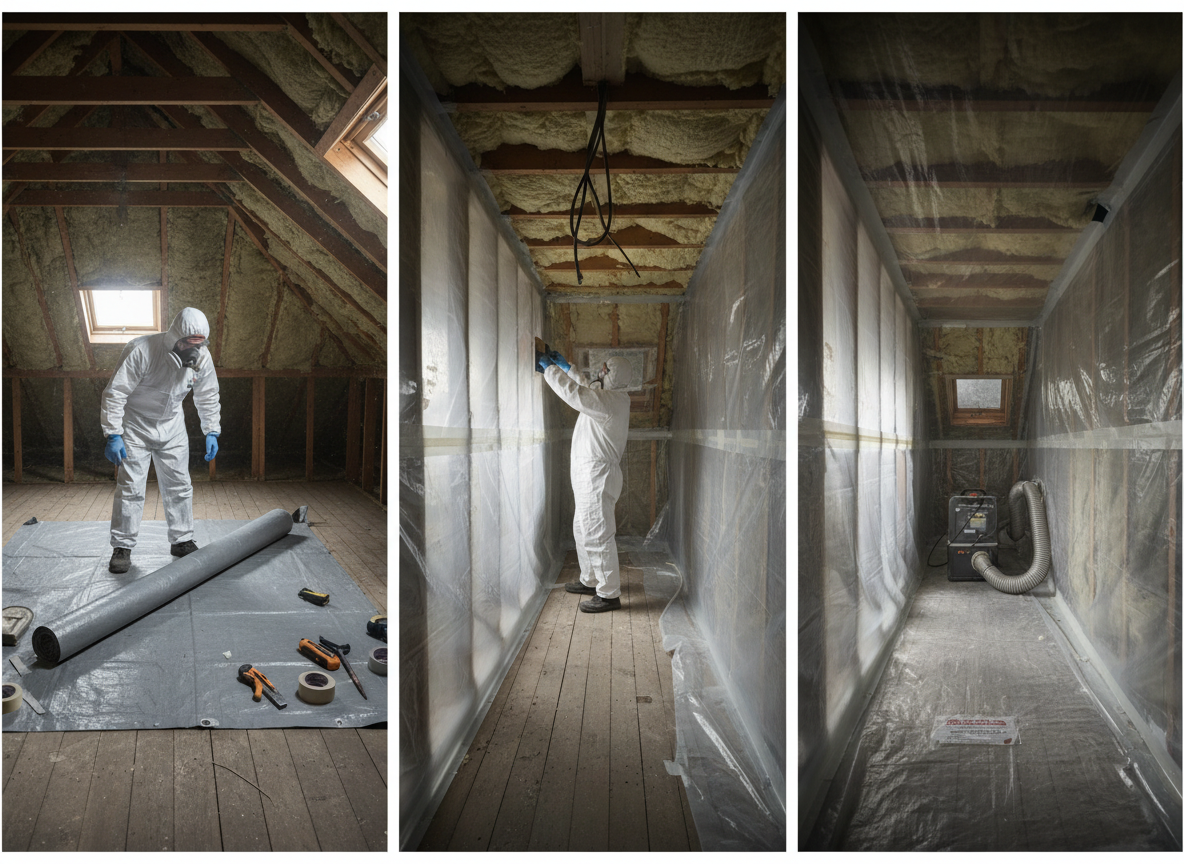
Preparing a loft in Grimsby for spray foam removal starts with a full inspection of access points and storage clearance, which usually takes one full day for a standard terraced property. Older homes in Grimsby and nearby Cleethorpes often have narrow loft hatches and limited headroom that require extra planning before any removal work begins.
Inspecting Access and Structural Condition
Walk through the loft space to confirm the hatch size and ladder stability before any removal crew arrives. Many Grimsby terraced houses built before 1950 have hatches under 600mm wide that may need temporary enlargement. Check joists for rot or sagging caused by past condensation, especially in properties near the docks where salt air accelerates timber decay. Note any electrical cables or water pipes running across the floor so they can be marked and protected. This inspection also reveals whether the roof felt or tiles show signs of previous leaks that must be addressed first.
Clearing Stored Items and Insulation Debris
Remove all boxes, suitcases and old insulation materials from the loft at least 48 hours before the scheduled removal date. In Grimsby homes, residents often store seasonal items in lofts that become inaccessible once spray foam is present, so clearing now avoids last-minute disruption. Place items in sealed plastic containers and label them for easy return after the work. Vacuum loose dust and any existing foam fragments from the floorboards to give clear sightlines for the removal team. Dispose of non-recyclable waste through the council’s bulky collection service rather than leaving it on site.
Addressing Moisture and Ventilation Issues
Test for damp patches on rafters and check that ridge vents or soffit grilles remain unobstructed, as Lincolnshire winters bring frequent driving rain that can trap moisture behind foam. Older Grimsby properties frequently show black mould along the eaves after spray foam installation, so photograph any affected areas for later reference. Open windows on the floor below to improve airflow during preparation and reduce humidity levels. If persistent damp is found, schedule an insulation assessment before removal proceeds to avoid repeating the same condensation problems.
Protecting Floors and Adjacent Rooms
Lay heavy-duty plastic sheeting across the loft floor and secure it with tape at the edges to catch falling debris during removal. Extend protection down the stairs and into hallways, because dust from closed-cell foam travels easily through small gaps in older terraced ceilings. Move furniture away from the hatch area and cover it with dust sheets. In homes with limited storage, arrange temporary off-site space for a few days rather than attempting to work around large items still in the loft.
Once these preparation steps are complete, the removal process runs more efficiently and reduces the chance of damage to the original roof structure common in Grimsby housing stock. Review the related article on why spray foam fails in older Grimsby terraced houses for additional context before booking work. For properties across Lincolnshire, see what influences spray foam removal costs in Lincolnshire homes to understand typical timelines and access challenges.