2026-10-22 ·
How Winter Damp Affects Spray Foam in Grimsby Lofts
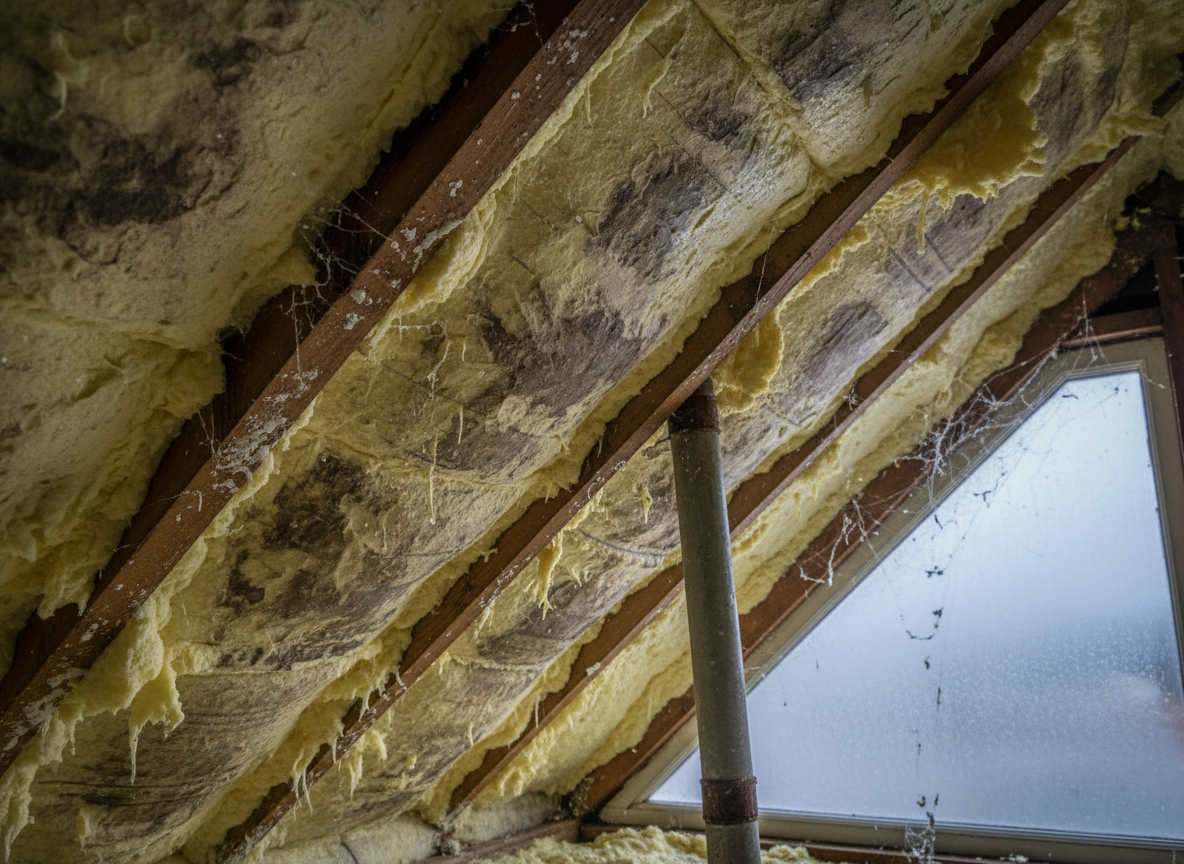
Winter damp affects spray foam in Grimsby lofts by allowing moisture from coastal air and rain to seep into the material, causing it to lose thermal resistance and trap condensation against roof timbers. In properties across Grimsby and nearby Cleethorpes, this process starts during the first sustained cold spell when loft temperatures drop and humidity rises from below.
Moisture Patterns in Grimsby Winters
Grimsby sits on the Lincolnshire coast where winter winds carry salt-laden moisture inland, raising humidity levels in lofts of Victorian and Edwardian terraces common in the DN32 postcode. Older homes here often have slate roofs with small gaps that let driven rain reach the underside, where spray foam was applied directly to the rafters. Once damp enters, the foam holds water rather than allowing it to evaporate, leading to softening and eventual detachment from the timber. Homeowners in areas like Waltham and Laceby report similar patterns after several consecutive wet weeks. The 24/7 team at 18 Hainton Ave, Grimsby DN32 9BB regularly inspects these conditions during callouts. Why Spray Foam Fails in Older Grimsby Terraced Houses explains the building stock details further. Local soil stays saturated through much of the season, pushing extra vapour upward through ceilings in single-storey extensions.
Effects on Open and Closed Cell Foam
Open cell spray foam absorbs water more readily than closed cell in Grimsby lofts because its structure contains pockets that fill during prolonged damp periods. Closed cell versions resist initial penetration but still suffer at the edges where they meet roof junctions or where previous ventilation gaps were blocked. Both types lose R-value once moisture content rises, forcing heating systems to work harder in properties around Immingham and Scunthorpe. The foam can also promote timber decay when it stays wet against rafters for months. Assessment visits often reveal hidden saturation behind the foam layer that only becomes visible after partial removal. loft spray foam removal addresses these layered problems directly. Coastal exposure in the Grimsby area accelerates the cycle compared with inland Lincolnshire locations.
Visible and Hidden Signs in Local Lofts
Residents notice musty smells rising through ceilings or dark staining along rafter lines first. In many Grimsby terraces, the foam surface develops a crusty texture where salt crystals form from evaporated moisture. Less obvious is the weight increase that pulls foam away from fixings, creating cold spots that homeowners feel on upper floors. Inspections at addresses near Louth and Kingston upon Hull frequently uncover mould colonies growing between the foam and the original ceiling plaster. These signs appear earlier in homes with poor eaves ventilation, a common feature in the older housing stock. Condensation Problems After Spray Foam Removal in Grimsby Attics covers the follow-on effects once the material is gone. Checking during the wettest months gives the clearest picture of active damp movement.
Practical Steps for Affected Properties
Start by improving external roof checks to stop new water entry before any internal work. In Grimsby lofts, this often means clearing gutters and replacing slipped tiles that allow wind-driven rain under the eaves. Once the source is controlled, full removal becomes necessary to prevent ongoing timber damage. dry ice blasting spray foam removal works well on timber surfaces common in local homes without excessive dust. After extraction, allowing the roof void to dry for several weeks before new insulation is installed avoids repeating the cycle. Properties in Lincoln and surrounding villages follow the same sequence when winter damp has already compromised the foam. The focus remains on restoring proper airflow while keeping the structure weathertight.